
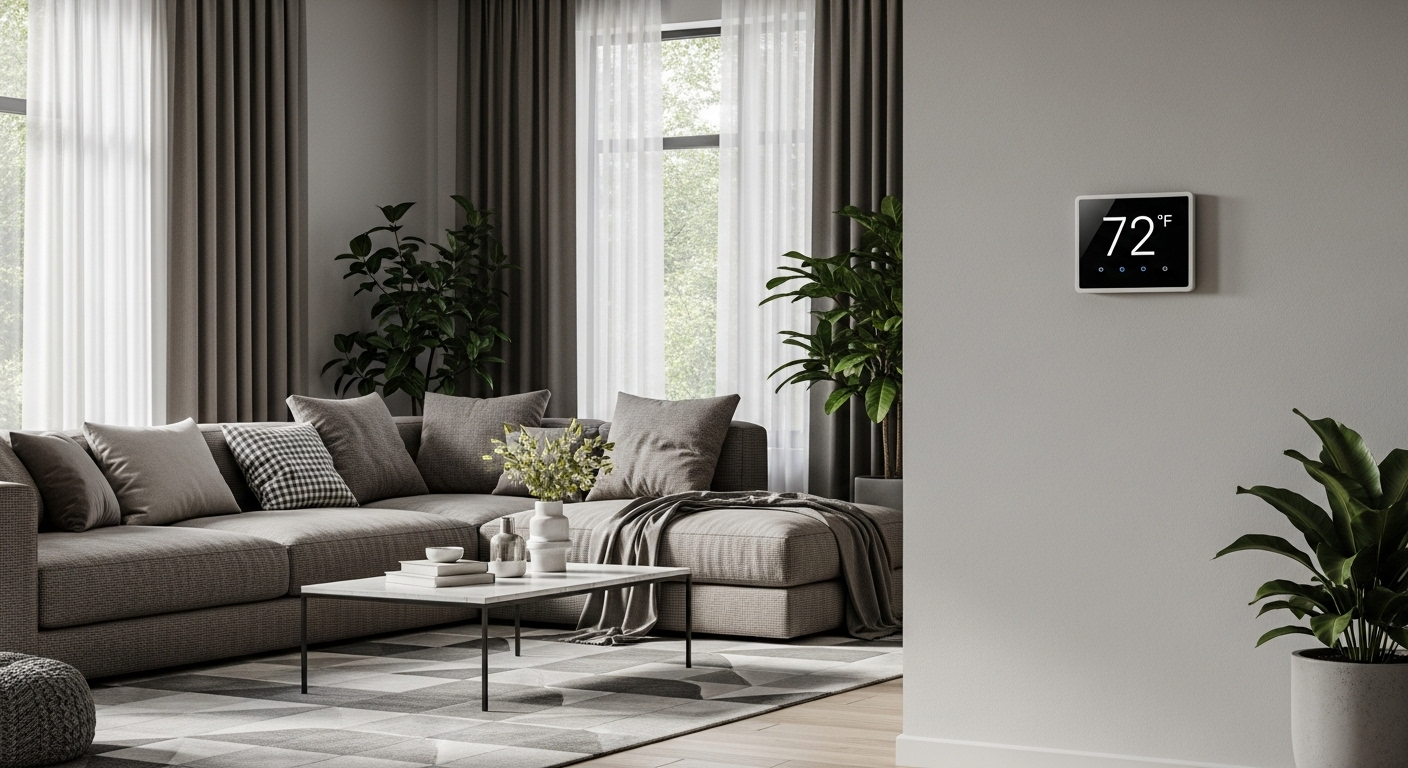
Has it become your nightmare to receive energy bills with high amounts every month? The main culprit could be your thermostat. Discovering how to program a thermostat for energy efficiency can help you save on heating and cooling by up to 10% each year. That’s a nice round sum of money coming back to you.
Being a master of smart temperature control does not mean getting a degree in engineering. You will be able to program a thermostat for energy efficiency in less than an hour with the correct attitude. You will enjoy the results, such as lower bills, a smaller carbon footprint, and a cozier home.
We present you with a step-by-step guide on everything you are going to need to know. You will learn how to select the right device, carry out its installation, and set the controls in the most efficient way. Ready to turn your home into an energy-saving powerhouse?
Why Programming Your Thermostat Matters
Heating and cooling your home accounts for about half of your energy consumption. If you don’t program your thermostat properly, your heating and cooling system will work more than necessary. It will heat or cool your house when you are not there.
Choosing the Right Programmable Thermostat
Different thermostats have different features. It will depend on your personal preferences, the size of your house, and how technophile you are.
Basic Programmable Models
For most simple scheduling purposes, these lowest-level devices are sufficient. One can preset temperatures for different times of the day and night. They are quite cheap and user-friendly. Ideal for a regular day-to-day routine.
Smart Thermostats
The latest innovations at the smart thermostat level really enhance your personal programming experience. They offer customized features through algorithms, which track your behavioral patterns. Additionally, many have smartphone applications for remote access. Leading brands include Nest, Ecobee, and Honeywell Home.
Compatibility Check
Before making a purchase, it is advisable to check if the HVAC and thermostat systems are compatible. Analyze the wiring of your current thermostat as a reference. The majority of residences are equipped with 24-volt systems consisting of 4-8 wires. If your system is different, e.g., heat pumps or multi-stage systems, consult the manual or a professional.
Step-by-Step Installation Guide
Installing a thermostat which is programmable is not a complex task. More than half of the homeowners are able to complete the installation within 30 to 45 minutes.
Attach the Thermostat
Attach the thermostat by mounting or snapping it on the base. Switch on the power at the circuit breaker. The device should turn on instantly.
Complete Initial Setup
You need to go through the setup with the help of the screens. You can get the weather forecast right by putting in your ZIP code. You must choose the type of your system (heat pump, gas, electric, etc). It is also necessary to set the correct time and date.
Once you have finished this initial system setup, you will be able to program your thermostat for energy efficiency right from the start.
Creating Your Optimal Temperature Schedule
Program your thermostat to balance comfort and savings.
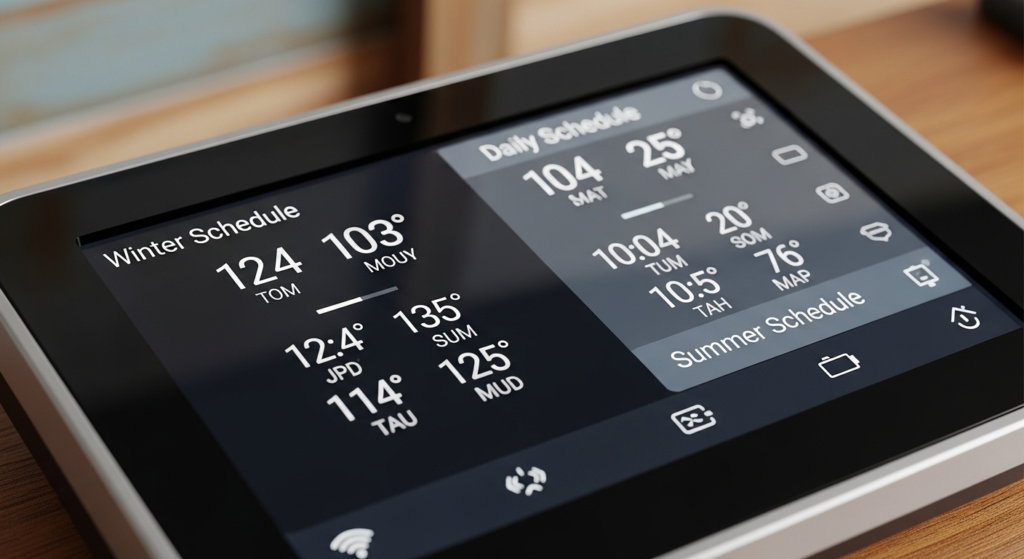
Recommended Temperature Settings
Winter Schedule:
- Get up: 68-70°F (6:00 AM)
- Out: 62-65°F (8:00 AM)
- Home: 68-70°F (5:00 PM)
- Bed: 62-66°F (10:00 PM)
Summer Schedule:
- Get up: 72-74°F (6:00 AM)
- Out: 78-80°F (8:00 AM)
- Home: 72-74°F (5:00 PM)
- Bed: 74-76°F (10:00 PM)
By using these ranges, you can program the thermostat for energy efficiency while maintaining your desired level of comfort. You can make changes to suit your preferences and the climate in your area.
The 8-Hour Rule
Each day, set the thermostat back to a lower/lazier temperature for at least 8 hours to save energy efficiently. The main times of the day, which are usually used for setback periods, account for overnight and workday hours.
Larger gaps cause your HVAC to use more energy, and hence your efficiency gains are reduced.
Weekend vs. Weekday Programming
Most thermostats let you program differently on weekends and weekdays.
Also, you can program differently for Saturday and Sunday, tv watching, dinner parties, and all your weekend activities. This is a great way to bring your actual lifestyle into programming your thermostat for energy efficiency.
Seasonal Optimization Strategies
Seasonal changes in your home offer different challenges for your thermostat. What is effective in January certainly will not be good in July. To be energy efficient, your programming needs to change, too.
Extreme Weather Preparation
Also, during heat waves and cold snaps, you can try to get most of your energy efficiency through pre-cooling and pre-heating the house. During extreme weather situations, you can make use of time-of-use pricing by running your system only during the off-peak hours when electricity rates are lower. This can be achieved by having your thermostat programmed for energy efficiency.
Humidity Control
High humidity will make you feel hotter than the actual temperature. Many smart thermostats have a built-in sensor to monitor humidity levels. When your AC is running for a longer period, it is able to remove more moisture, thus maintaining comfort without necessarily lowering the temperature.
Dehumidification requires less energy compared to air conditioning. This way of achieving balance at the same time helps to keep energy efficiency and comfort.
Advanced Features for Maximum Savings
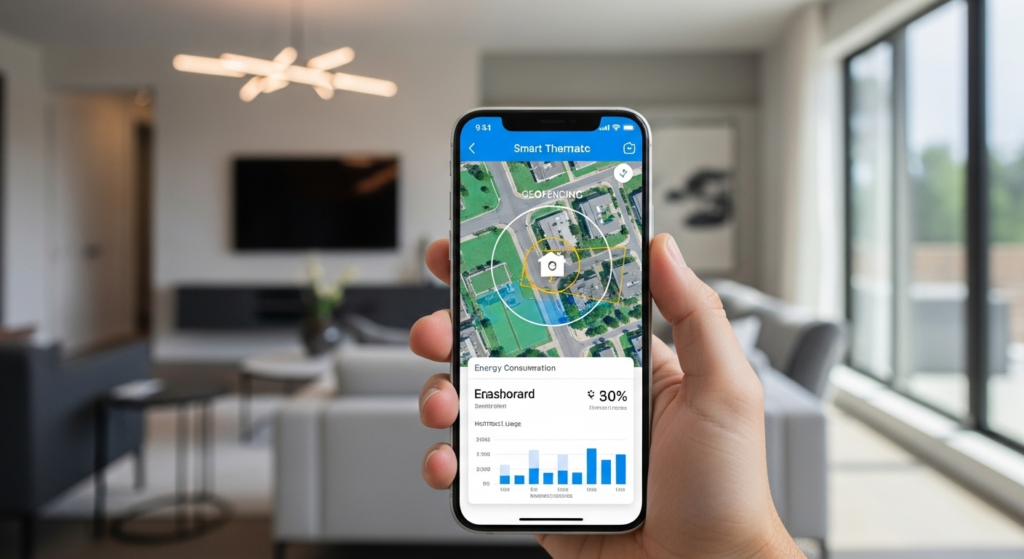
The newest generation of thermostats comes with advanced features that allow them to generate even more energy savings. These features make it possible for users to enjoy convenience and comfort together with energy savings.
Geofencing Technology
The geofencing feature makes use of your mobile phone’s location. Whenever you go out of a certain designated area around your home, the thermostat automatically switches the mode to away. Returning home, it sets the temperature to home automatically.
Integration with Smart Home Systems
The majority of programmable thermostats nowadays offer compatibility with other smart devices at home. For instance, you can give voice commands by linking with Alexa from Amazon or Google Assistant. Additionally, you can synchronize smart blinds or fans to smart thermostats for complete temperature control.
Common Troubleshooting and Maintenance
Even the most perfectly programmed thermostats require at least an occasional human interaction/attention. It is therefore useful to know how to recognize and fix them without wasting much time.
System Won’t Follow Schedule
To ensure that the system works as programmed, you need to do the following: check if the programming mode is active and not hold; verify if the time and day are set correctly; if the settings keep resetting, then change the backup battery.
Inconsistent Temperatures
Where you place your thermostat/becomes an issue sometimes in temperature fidelity. A thermostat that gets sunlight or is ventilated via draft or vents will not be able to read a correct/adequate temperature. If you find yourself in the situation of a program thermostat for energy efficiency, but not getting the expected result, then you might want to consider relocating the thermostat.
Wi-Fi Connection Problems
Regularly, check for firmware updates. There are times when manufacturers come out with new firmware versions for their devices to improve them as well as repair bugs.
Battery Issues
Keep in mind that if you have battery-operated thermostats, it is a must to change batteries every year. When your batteries are running low, you will get a warning 30-60 days before the thermostat totally dies. To avoid any loss of the settings that you worked really hard to program, it is advised that you change the batteries as quickly as possible.
Regular Maintenance Tasks
Twice a year, do cleaning of your thermostat. The accuracy of the sensor can be greatly influenced by dust and other particles. A soft brush or compressed air should be used to get rid of unwanted buildup. Using liquid cleaners is strictly prohibited.
Programming adjustments should be made every season. Adjust waking and sleeping hours to reflect the change in daylight. Continuous monitoring and fine-tuning that helps you program your thermostat for energy efficiency all year round.
Measuring Your Energy Savings
It is a great idea to keep a tab on the results of your thermostat programming to see if it is really working. Generally, most homes show an energy consumption drop already with the very first bill.
Compare Utility Bills
Compute the percentage decrease. A decrease of only 10% is still a very significant saving over the whole year when you program your thermostat for energy efficiency consistently.
Calculate Return on Investment
Remember to add the utility rebate to your calculator. There are numerous energy service companies that offer rebates for the purchase of energy-efficient appliances. The existence of the rebate will immediately improve your ROI.
Environmental Impact Beyond Your Bills
On average, a single household emits approximately 20 pounds of carbon dioxide per day from heating and cooling. By programming your thermostat for energy efficiency, you will be able to reduce your carbon footprint by anywhere from 10 to 30 percent.
If you think about it, what you save multiplies by a lot of households. Collective action can bring about a measurable change. You are helping to make the air cleaner and the planet healthier.
Smart temperature control helps to reduce the burden on the electrical grid. In periods of peak demand, a huge number of smart thermostats that have been programmed prevent blackouts and brownouts. Your personal choices support the resilience of the community.
Take Control of Your Energy Use Today
At this point, you possess all the necessities to program a thermostat for energy efficiency. The task is not as complicated as you might have thought. The benefits are also greater than what you expected.
If you are a total beginner to smart home technology, the best thing to do is to start with the basics of programming. Choose a schedule that fits your habits. Make minor changes in order to strike a balance between comfort and saving.
Are you prepared to take the next step? Discover the possibilities by using advanced features. Let the energy efficiency technology do the work for you on autopilot. And you won’t even realize the effort you put in.
Your programmable thermostat is not just a device that gives you comfort and saves you money. It is also your way of supporting a sustainable environment. So, every time a degree is adjusted or an hour optimized, you take a step nearer to your dreams.
Act now. Set your thermostat today. Enjoy lower energy costs and even more comfort.