
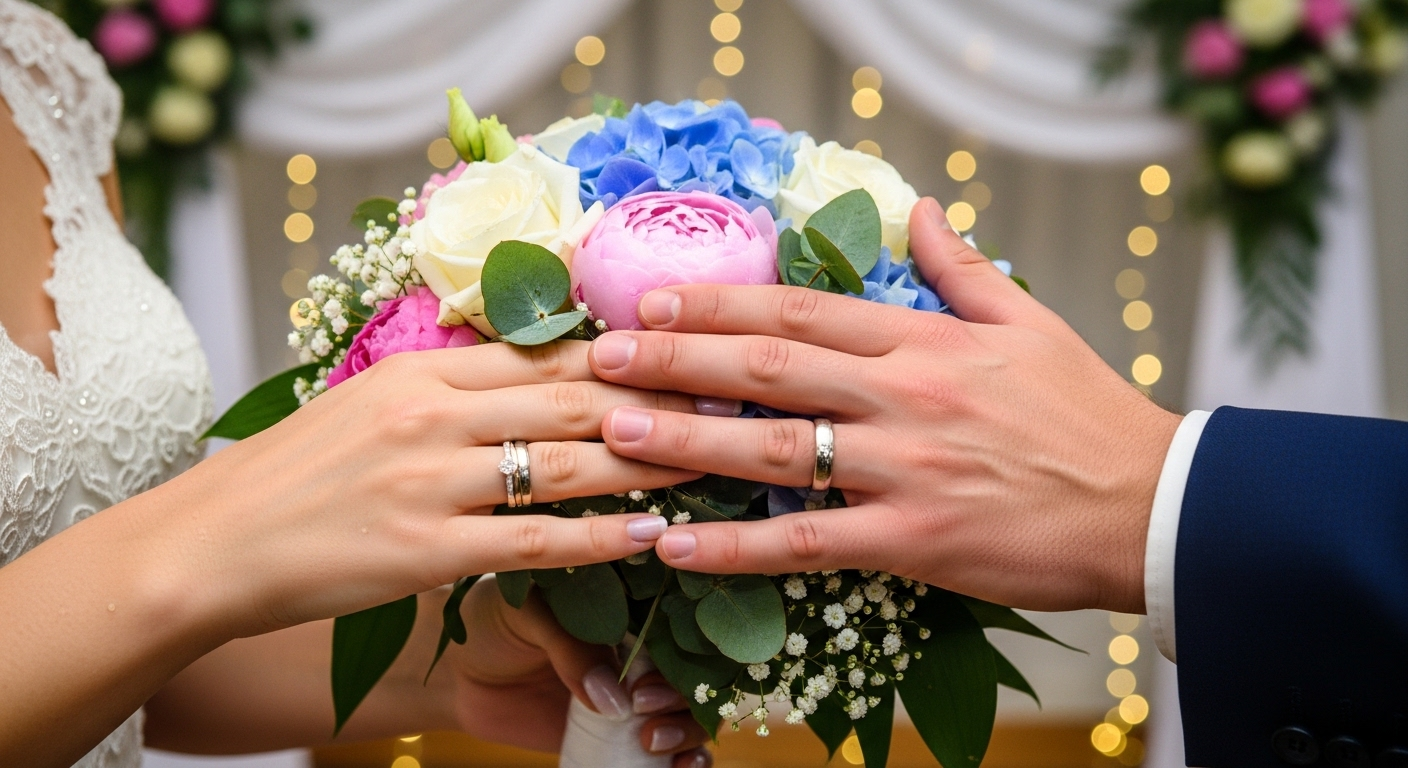
A wedding day is a perfect mix of love, joy, and creating memories that last forever. Though the cake gets eaten and the music eventually stops, your bouquet remains a pretty piece of that magic. Having skills in how to preserve a wedding bouquet DIY can let you keep those lovely flowers as a memory of your wedding for years.
Why let your flowers die when you can turn them into a piece of art? Doing wedding bouquet preservation at home is not just cheap, but also your wedding flower keepsake gets a very special personal touch. From framing and making resin souvenirs to simply drying them for a shadow box, there are plenty of ways that fit your style and skill level.
This post will help you to discover the top ways of home flower preservation for a wedding bouquet. We will discuss everything from basic air drying to advanced resin application so that the bouquet’s beauty is retained forever.
Why keep your wedding bouquet yourself?
Most couples allocate a large part of their wedding budget to floral arrangements. It is only natural that you would want to get the most out of such a significant purchase. When you decide to explore how to preserve a wedding bouquet DIY, you are given the liberty to come up with any ideas for your bouquet.
Using the services of a professional can be quite costly, plus they may ask you to send them your fragile flowers right after the wedding. Doing your bouquet preservation saves you money, and you don’t have to worry about shipping the flowers. Moreover, the preservation process itself might be a lovely habit that you and your partner or perhaps a close friend can do after the honeymoon is over.
Besides, you get to relish the feeling of being creative. When you see your bouquet frozen in time, it will remind you not only of the big day but also of your dedication to saving a piece of it.
Preparation: When to Start Preserving
The achievement of your project is determined even before the decision of the preservation method is taken. Flower freshness is very important. To maximize the beauty of your flowers when trying out different ways of flower preservation at home, you need to preserve the freshness of the flowers till you are completely ready to start the procedure.
Keep Moisture in Flowers
Throughout the wedding ceremony, make sure the flower stems go back in water every time they are not being held. For instance, at the head table, place a vase ready to hold a bouquet. After the party, cut the stems a little and then put them in clean water. Store the bouquet in a place that is cool and dark, and that is free of sunlight or heating that is capable of accelerating the wilting process.
Pick Your Preservation Method
In case dry-pressed flowers and other ways that need fresh flowers are your choice, the flowers have to be very fresh (not dried) when used in pressing. Silica gel works great with firm petals (fresh flowers). Hence, planning ahead of time for the method allows you to have all the necessary tools at your disposal.
Gentle Pretreatment
Try not to touch the petals too often, as the oils from your hands will facilitate browning. Before starting the preservation process, take out all the browned or dead petals. So that the bouquet, once finished, will be as good as new.
1st Option: Air-Drying Wedding Bouquet
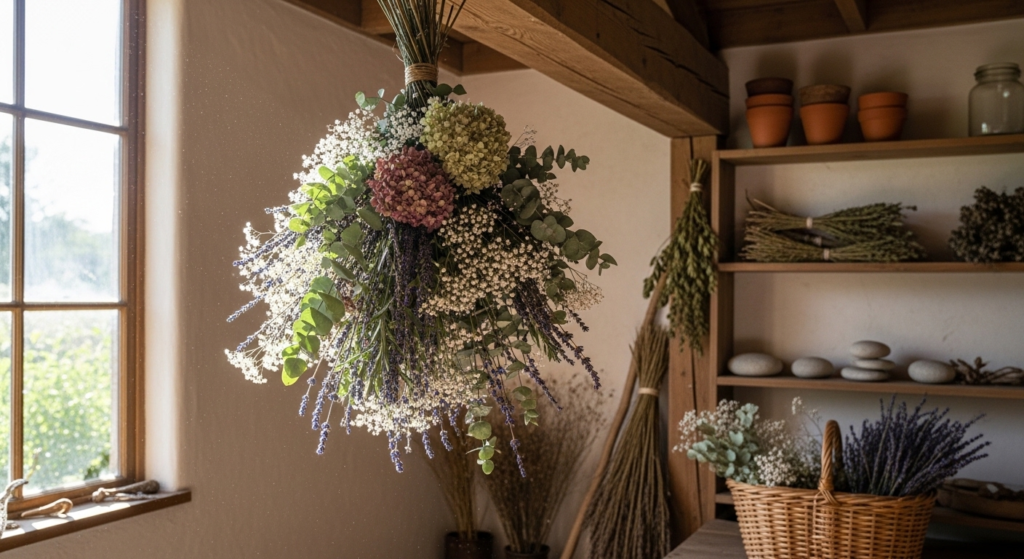
This is the most common and easiest flower-preserving way. Air drying suits strong flowers such as roses and lavender well; however, it is not suitable at all if you have delicate flowers that tend to hold a lot of water.
Step-by-Step
- Leaf removal: You have to take off leaves from the flowers, as the leaves hold moisture, which makes it difficult for the flowers to dry.
- Bundle them up: Hold the flowers in small bunches, or the whole bouquet may be reversed and hung to be dried. Secure the stems with a rubber band/twine, and use the rubber band if possible because of its elasticity.
- Hang in a dark and dry place: Select a place with great air flow, for example, a closet or a room. Avoid areas that can cause the flowers to dry slowly and the color to fade, such as bathrooms and the sun.
- Be patient: Usually, flowers take about two or three weeks to dry completely.
The above preservation method is the oldest of them all. Once dry and no moisture comes into contact with the flowers at all, they can last pretty much indefinitely. Flowers can be used in timeless shadow boxes or placed in a vase.
Method 2: Using Silica Gel to Dry Wedding Flowers
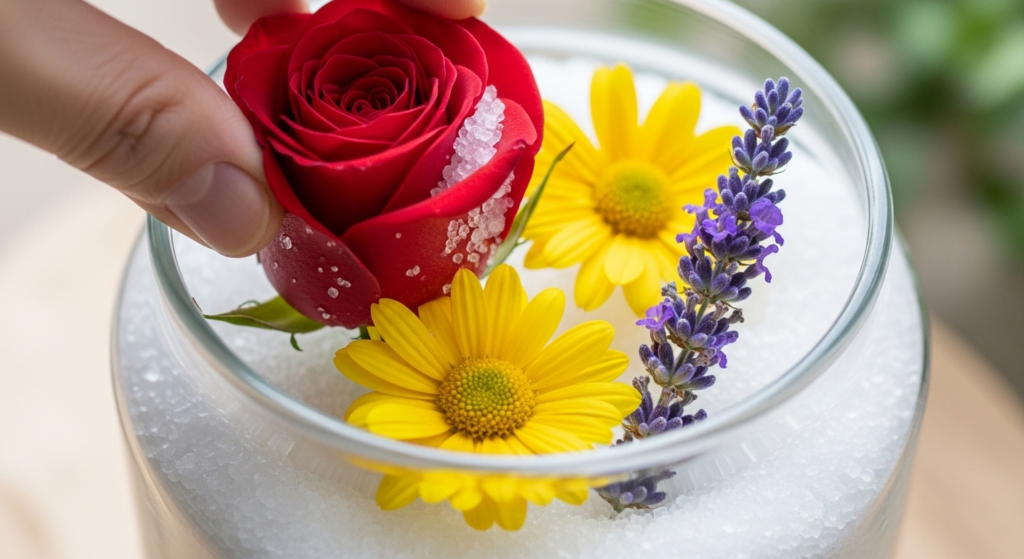
For keeping the flowers almost as fresh as possible, silica gel is an ideal product. Unlike air-drying, the colors of the petals stay brilliant, and the flowers do not get as flat because the gel dries them soon.
What You Need
- Silica gel sand (to be found at a craft store)
- A container that can be sealed and that is airtight
- A soft brush
- Scissors
Procedure
- Get your container ready: Put a layer of silica gel at the bottom of your container (an inch or so).
- Cut the flower stems: Leave 1-2 inches of the stems for the flowers.
- Put the flowers: Arrange your flowers facing up on the layer of silica. Make sure the flowers do not touch one another.
- Cover the flowers gently: Sprinkle silica gel slowly around the flowers and over them as well. Take care not to crush the flowers when filling the silica around and over the petals. Don’t leave any part of the flowers uncovered.
- Seal the container and wait: Be sure to close the lid tightly. Leave it for 3-7 days in a quiet place, depending on the kind of flowers you have.
- Take out the flowers carefully: Empty the container completely and carefully take out the flowers. To get rid of crystals, use a soft brush.
The method described above can be referred to as a perfect solution for anyone who is eager to figure out how to preserve a wedding bouquet DIY and yet enjoy the original color of their bouquet.
Method 3: Flower Pressing
Pressed flowers can be put in the frame. Pressed flowers are a lovely two-dimensional painting that can be hung up as a picture. As far as flower type is concerned, the method naturally favors flat-faced plants like pansies or daisies, but roses, either by halving or separation of petals, can work too.
Pressing Flowers with a Book
- Choose a heavy book: A large-volume dictionary or an encyclopedia is a good option.
- Set the paper: Open your book and put two sheets of baking paper or absorbent paper inside.
- Lay flowers properly: Take the flowers and position them properly on one sheet of paper. Make sure no petals are overlapping.
- Press the flowers: Put the second sheet over the flower and close the book. Stack other heavy books or objects on the seat to apply weight.
- Time: After two weeks, the flowers can be checked. If they are still moist, change the paper and press for another week.
Pressing Flowers with a Microwave
If you want pressed flowers quickly, you can give your flowers to press in the microwave (the flower press is available online, and you can also make it from ceramic tiles and cardboard).
- The flowers, along with two pieces of paper and cardboard/tiles, get sandwiched.
- Microwave in short bursts (30 seconds) until dry.
- Make sure you do not burn the flowers.
The framed flower press is a grown-up way to deal with how to preserve a wedding bouquet DIY, making your bouquet a permanent gallery piece.
The 4th Method: Resin Casting
Preserving with resin has gathered a lot of fans lately. This process involves dipping your flowers into a clear epoxy resin, which results in long-lasting souvenir or decorative objects such as paperweights and coasters. Plus, the resin preservation method is quite a skilled one, so if you still have some resentful flowers to practice on, go ahead.
Safety Issues
Resin is a chemical. Ensure that your working area is well-ventilated, and wear gloves and a respirator mask at all times.
Step by Step
- Remove the moisture in dried flowers by drying them first: If you put fresh flowers in resin, they will definitely rot. The silica gel method mentioned above provides the best 3D shape that needs to be used in drying.
- A proper mix should be done for resin:
- According to the manufacturer’s directions, mix your hardener and resin. You need to be very accurate in this step.
- First, pour a thin layer of resin:
Set the layer of resin light. Do not pour too much, as this will be the base layer. After a layer of resin, let it cure to a “tacky” stage. - Flower placement:
Approach the flowers face down (if you are looking through a mold from the top) or in any way you want to view them. - Pour out the rest of the layers of resin:
Resin layers should be poured, and after each one, the next should be poured when the previous one cures.
This will work both ways; you will not have flowers float to the top, and bubbles will be reduced. - Unmold:
Once fully cured (usually 24-72 hours), pop your creation out of the mold.
Modern, translucent keepsakes made by the resin preservation technique give an impression of your flowers being frozen in time.
The 5th Way: Wax Dipping
By waxing flowers, you can get an old-timey feeling carried with you. It is really a great way to make cut flowers last for months, but not forever. Moreover, the petals become shiny and very romantic.
Procedure
- Melt the wax in a double boiler until it is completely liquid.
- Turn the heat down a bit, so the wax is not too hot (the flowers would be cooked if it were).
- Dip flower heads gently to coat with wax.
- Immediately dip into cold water to set the wax.
- Stand and dry yourself.
The idea of dipping into wax is another solution to how to preserve a wedding bouquet diy for a temporary showcase, for instance, a holiday table after a wedding.
Displaying Flowers after Preservation
A kept flower is a kept memory. And we all love to put our keepsakes on display, don’t we? There are many ways in which you will be remembered from your wedding every time you look at your bouquet.
Shadow Box
The shadow box is a kind of frame that looks deep inside. Hanging air-dried or silica-dried bouquets is one way to decorate the inside of the shadow box. You can also attach other small memorabilia from your big day to it.
Floating Frames
If you’re dealing with pressed flowers, glass floating frames will be the best for your wall art, as they are simple, understated, and classy. Due to the fact that light is allowed to go through the panes, this enables the light to get to the flowers, thereby making the delicate veins, hues, and colors of the petals stand out.
Resin Jewelry
If you preserved your flowers using the resin method, you can create small jewelry pieces. For example, you can make a pendant or a pair of earrings with your bouquet’s tiny petals and wear your wedding memory on your anniversaries or special occasions.
Christmas Ornaments
You can fill some decorative transparent balls with your dried petals and place a ribbon around the top to match the color of your wedding theme. That way, when you put up the Christmas tree every year, it will remind you of your special day.
Errors to Steer Clear of
Learning how to preserve a wedding bouquet DIY means getting through a certain amount of trial and error. Avoid these common errors to figure out your project smoothly.
- Procrastination: The flowers that have been brown or moldy for a while would produce a very bad souvenir if they are used. Act fast.
- Mistaking wet flowers in resin for dry ones: Rot and resin cloud are the consequences of this mistake. The flowers should always be dried completely first by using silica gel.
- Direct sunlight: One way or another, UV rays quickly bleach color, even if dried flowers get sun or are just exposed. To avoid that, keep your preserved flowers away from windows.
- Ignoring humidity: Obviously, moisture is a big no-no for dried flowers. If you reside in a humid area, your preserved bouquet would be better in a closed container or a frame.
Keeping The Memories Alive
A wedding bouquet is not merely a handful of flowers; it is a commitment and celebration symbol. Self-restoration of wedding flowers can also be a great souvenir of the big day.
Whether you prefer to press a single rose in your book or submerge the whole floral arrangement in an enormous resin block, it is the time and effort spent on bouquet preservation that makes the flowers priceless. By doing so, you turned a floral arrangement that is momentary into a legacy of your love story.
It is time that the wedding memory be planned and the supplies be bought. You have to clear a space and create a reminder of your special day, which lasts a lifetime, with your wedding bouquet, by which you will always reconnect with your day of heartfelt joy.
FAQ
Yes, to some extent. Air-dried flowers can be sprayed with floral sealant to prevent further shattering if they are well-shaped after drying. Similarly, if the flowers are brittle and brown, their color cannot be restored, nor can their flexibility be regenerated.
How long does DIY flower preservation take?
It is all dependent on the method used. Years is the lifespan of air-dried flowers, but they may fade or break when handled. Flowers in resin may remain intact forever, provided that they are not exposed to the sun. Likewise, if protected from moisture and light, pressed flowers kept in a frame will last for decades.
Is silica gel dangerous when used in homes?
Normally, silica gel is not toxic; however, the dust can irritate your lungs. Since the dust particles are really fine, it is advisable to wear a respirator when pouring it. Besides, keep it out of reach of children and pets.
Are all types of flowers preservable?
Likely yes, but some flowers are more difficult to preserve than others. For instance, due to their high water content, succulents are difficult to dry without rotting. Thin flowers like poppies are delicate to an extreme. You should check up on the characteristics of your flowers when figuring out how to preserve a wedding bouquet DIY, so that you pick the best method for each flower.