
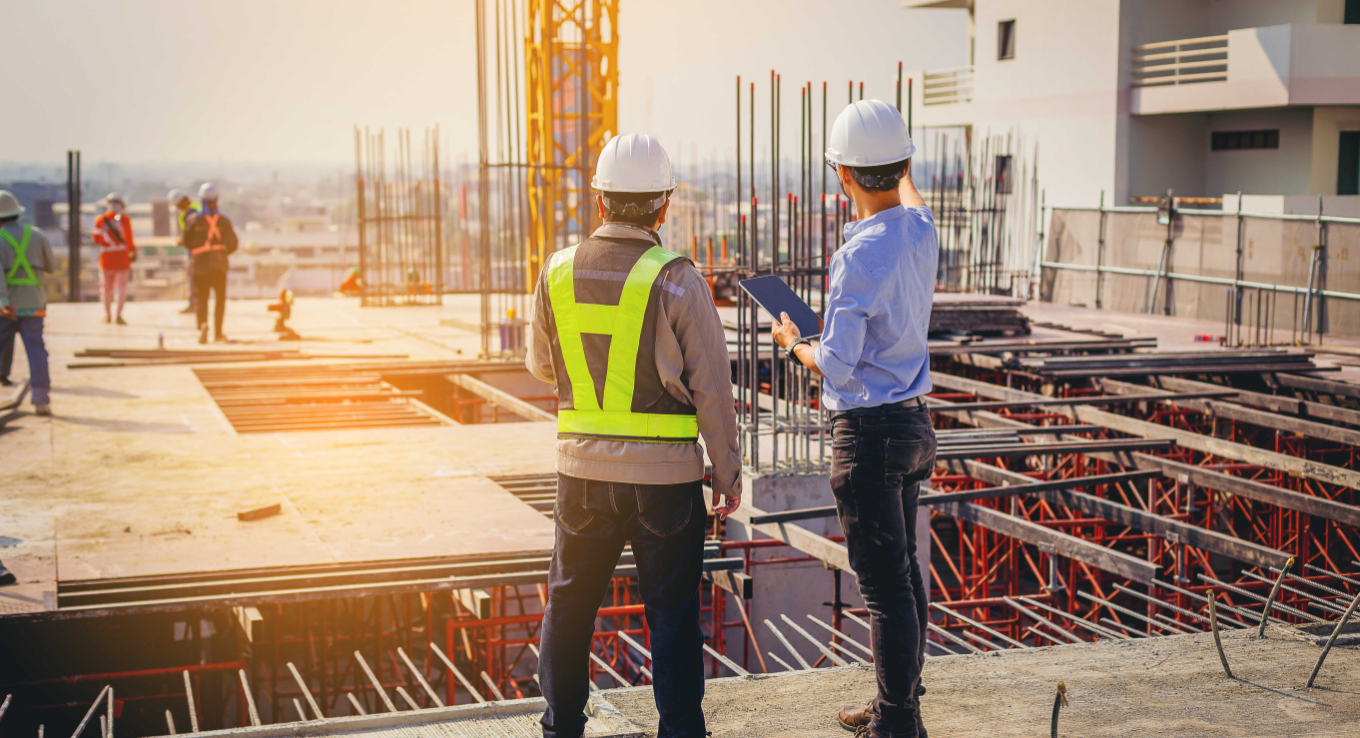
The determining factor between a perfectly built structure and one that fails, draining your money, could be just a tiny fraction of an inch. Accuracy in construction is not merely a target; it is the basis on which safety, budget, and the stability of the structure depend. The increasing complexity of projects and the pressure of looming deadlines have led to a greater reliance on highly accurate construction measuring tools.
In the past, builders minimally equipped with only knotted ropes and geometry could still construct buildings that last to this day. Though the laws of physics remain unchanged, the way we apply them through technology has indeed changed and advanced. Switching from manual devices to digital and laser-based ones has not only upgraded the efficiency of the job site but also changed the nature of measurement from a lengthy, two-person chore to one where a single person can finish measurements in no time while feeding data to 3D models directly.
The Enduring Value of Traditional Measuring Tools
While the wave of technology has brought in more options, old-style, traditional measuring instruments are the fundamental pieces of any tool belt. They are dependable, do not need batteries, and are usually the quickest means of conducting fast checks and minor jobs.
The Tape Measure: An Indispensable Classic

A retractable tape measure is arguably the most well-known tool among construction tools for measuring. Its usage is everywhere. Why does no one really top its popularity, whether it’s a 25-foot tape for the frame or a 100-foot fiberglass reel for site layouts? The modern tapes have seen various improvements in durability, wider blades have been added for longer “standout,” and markings are clearer for easier reading. For brief distances and quick cross-checks, the tape measure still rules the roost.
Levels and Plumb Bobs
Guaranteeing walls or surfaces are perfectly horizontal or (level) or vertical or plumb) is of utmost importance. The spirit level is a simple tool consisting of a liquid-filled vial and a bubble; the bubble’s position gives an instantaneous visual indication of alignment. Also, the plumb bob is a pointed weight that hangs by a string and uses gravity to establish a true vertical reference line. These tools are required when framing walls, doors, and posts.
Advantages and Limitations
The main advantage of the traditional construction measuring tools is that they are simple and cheap. They are strong and can withstand the rough outdoor conditions of a construction site. On the other hand, they pose some limitations. Mistakes are often made by humans in reading measurements, and this problem never goes away. Making a long measurement with a tape can cause it to sag, leading to inaccuracies. Additionally, a plumb bob can be problematic in the wind, and a spirit level used on spans longer than the tool itself may result in significant errors.
Laser Measuring Tools: Speed and Accuracy
Considering the appearance of laser technology in the industry, it is justified to say that it raised the bar of what was previously possible. Manual tools plus laser construction measuring tools will give you more precision and speed, especially when it is a matter of interior work and large-scale laying out.
Laser Distance Meters
These are often referred to as tape measures, quite simply because they have the look and function of a measuring tape. The meter entails that the device sends out a pulse of laser light to a target and calculates the distance based on the time it takes for the light to be reflected. These pieces of equipment are capable of measuring up to hundreds of feet with the precision of just 1/16th inch. Apart from measuring distance, the high-end models are capable of instantly deriving an area and volume as well, which makes the task of determining the amount of materials for floors or painting extremely easy.
Laser Levels
Laser levels shine a very bright line of light on the surface of the walls, floors, or ceilings, which allows one to determine whether the features within the room are in line (level and plumb) with each other.
- Line Lasers: Project cross-lines for aligning tiles, cabinets, and electrical outlets.
- Rotary Lasers: Spin 360 degrees to create a level plane across a large area, ideal for grading land, pouring concrete, and installing drop ceilings.
Greater Accuracy and Less Effort
There is no doubt that the introduction of lasers on construction sites, where they are currently used as measuring devices, dramatically changes the amount of work that has to be done. An activity that used to involve two people holding a tape and be time-consuming now can be done by one person in seconds. The resulting cost savings are a direct consequence of this increased productivity. Besides, lasers eradicate the tape measure, meaning that a measurement of a hundred feet is just as precise as a measurement of ten feet.
Digital Levels and Inclinometers
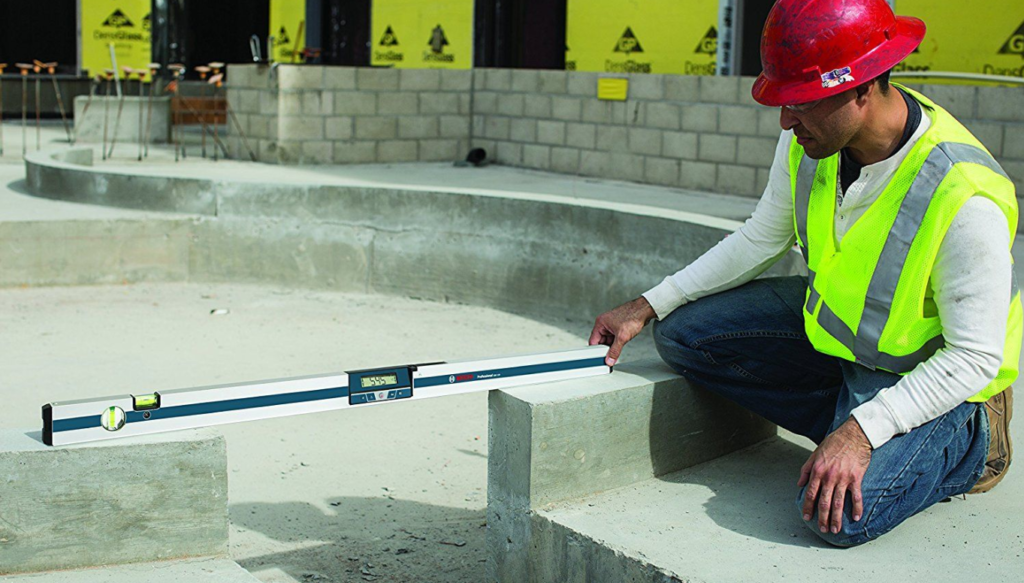
Traditional levels marked with bubbles are great for determining whether a surface is commodiously but they do not tell you how far from level the surface is. This is where digital levels and inclinometers come into play; they provide extremely accurate numerical readings on angles and slopes.
Accurate Angle Measurements
Digital levels resemble common box levels; however, they contain an electronic screen that displays the exact angle of the surface in degrees, percent slope, or pitch. This becomes indispensable for installations of ramps complying with ADA standards, determination of pitches of roofs, and installations of drainage pipes where gradients have to be such that they meet the code requirements.
Various Applications in Alignment and Grading
One of the most crucial basic requirements in landscaping and civil engineering is to determine the proper grade for effective water management. Operators of construction equipment can use digital inclinometers to check slopes in a matter of seconds. Similarly, even in structural steel erection, they ensure that columns are perfectly vertical and beams are installed precisely as per the design specifications. The digital readout removes the guesswork of interpreting a bubble between lines, thereby reducing the probability of having to redo the work.
Total Stations and GPS Systems
Infrastructure and commercial projects on a large scale require the use of measurements that go beyond feet and inches and enter the realm of miles. Survey instruments such as Total Stations and GPS systems represent the norm in the industry for conducting layout and collecting geospatial data.
Total Stations in Layout
In terms of function, a Total Station is an instrument that is both electronic and optical, which can be used for surveying and building construction. It combines both the functions of an electronic theodolite (which measures angles) and an electronic distance meter (EDM). These high-end construction measuring tools pinpoint coordinates not just with high precision but also with millimeter-level accuracy. All this combined tturnsthe digital blueprints into the real physical job site.
GPS for Large-Scale Projects
The Global Positioning System (GPS) has entirely changed the planning and earthwork landscape. The GPS receivers that are fixed on bulldozers and excavators assist the operators in leveling the terrain to the design right on the spot without the necessity to set survey stakes. Additionally, it is possible to achieve significant site preparation accelerations through the use of machine control technologies. Using survey-grade GPS units is indispensable when it comes to mapping and land boundary marking. They will guarantee that the line of the building precisely follows the architect’s plan.
Drones: The New Perspective in Measurement
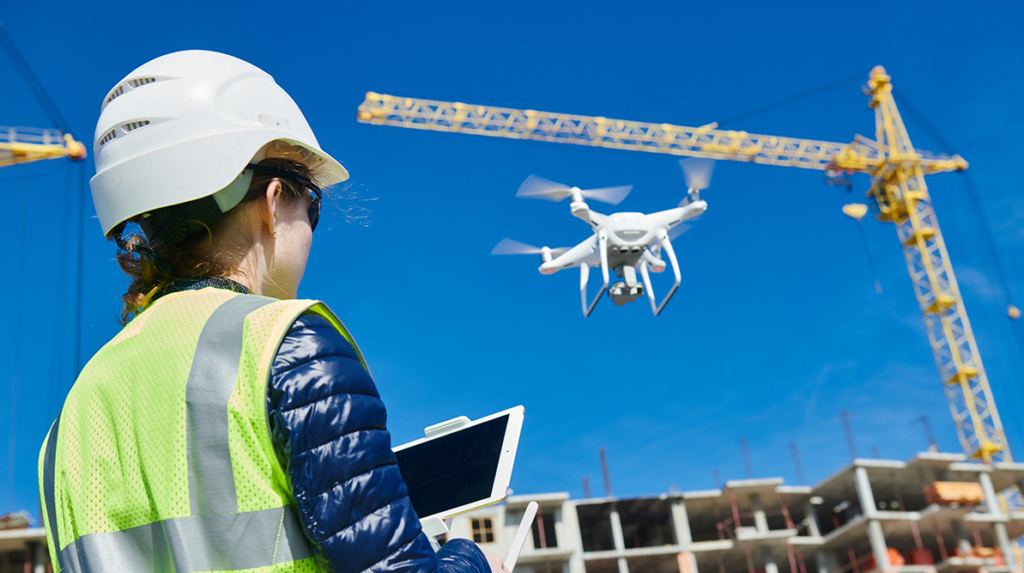
Unmanned Aerial Vehicles (UAVs), or drones, have quickly evolved from being merely cool gadgets used by hobbyists into becoming indispensable construction measuring tools. They provide an unrivalled viewpoint and a collection capability which no ground-based instrument can match.
Site Surveying and Progress Monitoring
Among other things, drones fitted with high-resolution cameras and Light Detection and Ranging (LiDAR) sensors are capable of mapping entire construction sites in a matter of minutes. A technique referred to as photogrammetry is employed to create 3D contour maps and point clouds by stitching together the pictures that were taken. This means that the project managers can assess the volumes of stockpiles (such as gravel or soil) swiftly and in a safe manner without physically climbing on unstable piles.
Speed, Safety, and Data
The main advantage derived from such construction measuring tools as drones is the increased level of safety. A drone can be used to conduct surveys at dangerous or difficult-to-access places, such as steep slopes, roofs, or near fast-moving highways; the operator never has to be in harm’s way. What is more, the time saved in gathering data allows for monitoring the site progress on a daily or weekly basis, thus giving the stakeholders almost up-to-the-minute information on how the project is faring against the schedule.
Software and Data Integration
The real strength of utilizing modern measurement tools is not in the tools themselves but in the subsequent processing of the gathered data. The incorporation of measuring data into software systems continues to change the way projects are managed.
Bridging the Gap to BIM
Building Information Modeling (BIM) depends on the availability of trustworthy data. The construction measuring tools, like laser scanners and Total Stations, that are used in the field, continuously update the “as-built” conditions off-site back into the BIM model. This gives the architects and engineers the ability to check if the actual construction fits the digital design.
Collaboration and Clash Detection
If the field data is uploaded to the cloud straight away, collaboration also benefits. For instance, a site manager might measure a dimension by using a laser distance meter with Bluetooth, and that dimension would immediately show on the plans the architect is viewing at the office. Such data flow in real-time enables “clash detection”, which is identifying in advance where two different building components (such as a duct and a beam) might interfere with each other, thus saving the costs of the rework to thousands.
Case Studies: Measuring Tools in Action
If one wants to comprehend the extent of influence of technologies in the modern world, then an evaluation of how advanced construction measuring tools have affected the results of some real projects will help.
The High-Rise Renovation
In the case of the recent renovation of a historically important skyscraper located in Chicago, the contractor discovered that the blueprints on which the design was based were not only old but also inaccurate. 3D laser scanners were the advanced construction measuring tools selected by the contractor to be able to capture details of the entire interior structure. The revelation from the scan was that the concrete columns were far from being plumb,b and their thickness also varied significantly.
- Outcome: The new curtain wall components were manufactured based on scan data and not the old drawings. This decision saved the contractor from the potential drastic delay of weeks, which would have been the case if the prefab panels hadn’t matched the irregular structure and had to be remade.
The Highway Expansion Project
When a major widening of the highway was being undertaken, the operators of the earthmoving equipment made use of GPS machine control technology to get the graders and dozers.
- Outcome: The grading part of the task was completed even earlier than planned by 20%. The reason why the materials used in the process of cutting and filling were not wasted (whether home excess or deficiency) is the high precision of GPS. This consequently allowed savings in the costs of both the fuel and the materials that were obtained.
Future Trends in Construction Measurement
The ongoing development in construction measuring tools hints at the increasing use of automation and the extension of integration. When assessing what the future might hold, we can single out a few promising emerging technologies that will continue to disrupt this industry.
AI and Robotics
Artificial Intelligence already has the ability to interpret measurement data automatically. At some point in the future, software wouldn’t just jot down that the wall is not vertical, but it would instantly come up with the best remedial action. The role of robotics will be more significant, whereby autonomous robots could perform scans and layouworkks throughout the night, so by the time the crews arrive,e the site would already be ready.
Augmented Reality (AR)
AR gadgets are changing how measuring is perceived. Rather than referring to a 2D plan, a worker who puts on AR glasses can observe the digital model overlaid on the physical environment. They are guideby d where the wall should be built or simply by looking at two points and making a gesture, they can measure the distance.
Choosing the Right Tool for the Job
With so many options available, selecting the right construction measuring tools depends on the specific demands of your project.
- For DIY and Residential Repair: A high-quality tape measure, a torpedo level, and a basic laser distance meter are usually sufficient.
- For Interior Finish Work: Line lasers and digital levels are essential for achieving the high level of finish required for cabinetry and tile work.
- For Commercial Construction: A combination of rotary lasers for flooring and Total Stations for layout is standard.
- For Civil and Site Work: GPS systems and drones provide the macro-level data needed for large earthworks.
One cannot overstate the importance of phenomena called quality when it comes to investments in construction measuring tools. Even when it comes to a cheap instrument, if it is prone to losing its calibration too soon, the consequence in terms of rework can be way more expensive than the cost of purchasing a top-notch one. Not only isit important, but also keeping your construction measuring tools regularly calibrated and well-maintained.
Conclusion
Construction measurement tools are advancing in tandem with the rapid development of the construction sector of constructio sectorn. On one extreme, there is the humble tape measure that is always there in your pocket, and then there are autonomous drones that can map from the air over vast stretches of land, and essentially, it is this type of equipment that supplies the data, which in turn is the main ingredient for architectural designs to become real physical structures.
It is almost absurd to think that a contractor in today’s world can successfully make a business out of consistently delivering projects on time, within the budget, and to the highest quality standards if he chooses not to be up to date with what the latest construction measuring tools are capable of. By properly selecting the right tools and using them effectively as part of your workflow, you will be performing steps that essentially lead to building success at every measure taken.








1 thought on “Precision Matters: Top Construction Measuring Tools for Modern Projects”
Good Content