
One of the greatest pleasures in life is gardening and then simply enjoying the beauty of your garden. Unfortunately, sometimes the wildlife that eventually comes to visit you makes your hard work their meal. If you are struggling with the problem of how to deter birds from garden areas, then know you are not the only one. It is a common dilemma that growers have all over the world.
There is no doubt that birds are quite charming as they bring singing and movement to your garden. However, once the birds become your enemies by destroying your fruits and vegetables, that may be a problem. It is very important that, while you protect your harvest, you don’t harm the creatures that are an essential part of the entire ecosystem.
In this section, you’ll learn all about how to protect your plants. We first delve into what attracts birds to your garden, and then we suggest suitable, humane ways of keeping birds out using physical barriers or natural sprays, etc.
Understanding Why Birds Visit Your Garden
It is quite necessary to realize the attraction of birds to your garden first, before you start planning how to get rid of them. Common sense would suggest that if an animal visits one’s property repeatedly and at will, it is because it finds food and water there, as well as safety.
Food Sources
The main lure has to be food, of course. Your garden offers all sorts of goodies in a buffet style.
- Seeds: Birds love to eat grass seeds, just planted or vegetable seeds.
- Fruits and Berries: Berries and fruits like strawberries, blueberries, and tomatoes attract birds by their bright colors and good taste.
- Insects: Birds help by eating aphids and other insects, but they can also harm the plants when they dig up the ground for worms and grubs.
Water Sources
Birds consume water not only in order to quench their thirst but also to take a bath. Bird baths are deliberately installed to attract birds, but there are also water sources that are not intentionally put there but still attract birds. Birds are attracted to such things as water puddles formed by irrigation, blocked gutters, or plant pot saucers.
Shelter and Nesting Opportunities
Birds use shelter mainly to hide away from their enemies. Pushes, trees, and other places where one can hide serve this purpose. If your garden is a safe place for them, birds will spend more time there. They can even make it their home by building nests.
Non-Lethal Methods to Deter Birds
It is humane to chase the birds away and not to cause them any harm. There are various types of non-lethal deterrents that can be classed into the following categories that you can use.
Visual Deterrents
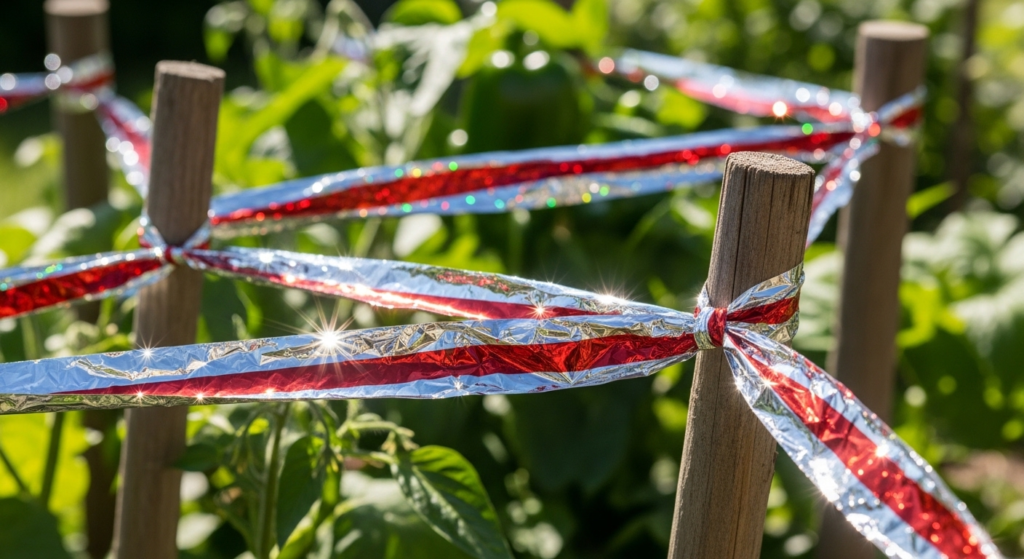
In fact, birds especially rely on their vision. You can use this against them by bringing in objects that give an impression of being dangerous or unpredictable.
Reflective Tape and Shiny Objects
Flash tape is the most common product used. It is a glittering, Mylar tape that bounces back the sun, and in the wind,d it creates a crinkling sound. The shining light disturbs the birds. Apart from the tape, you can also hang up old CDs, aluminum foil strips, or little mirrors. The reflection and movement will scare the birds so that they will stay away.
Scarecrows and Decoys
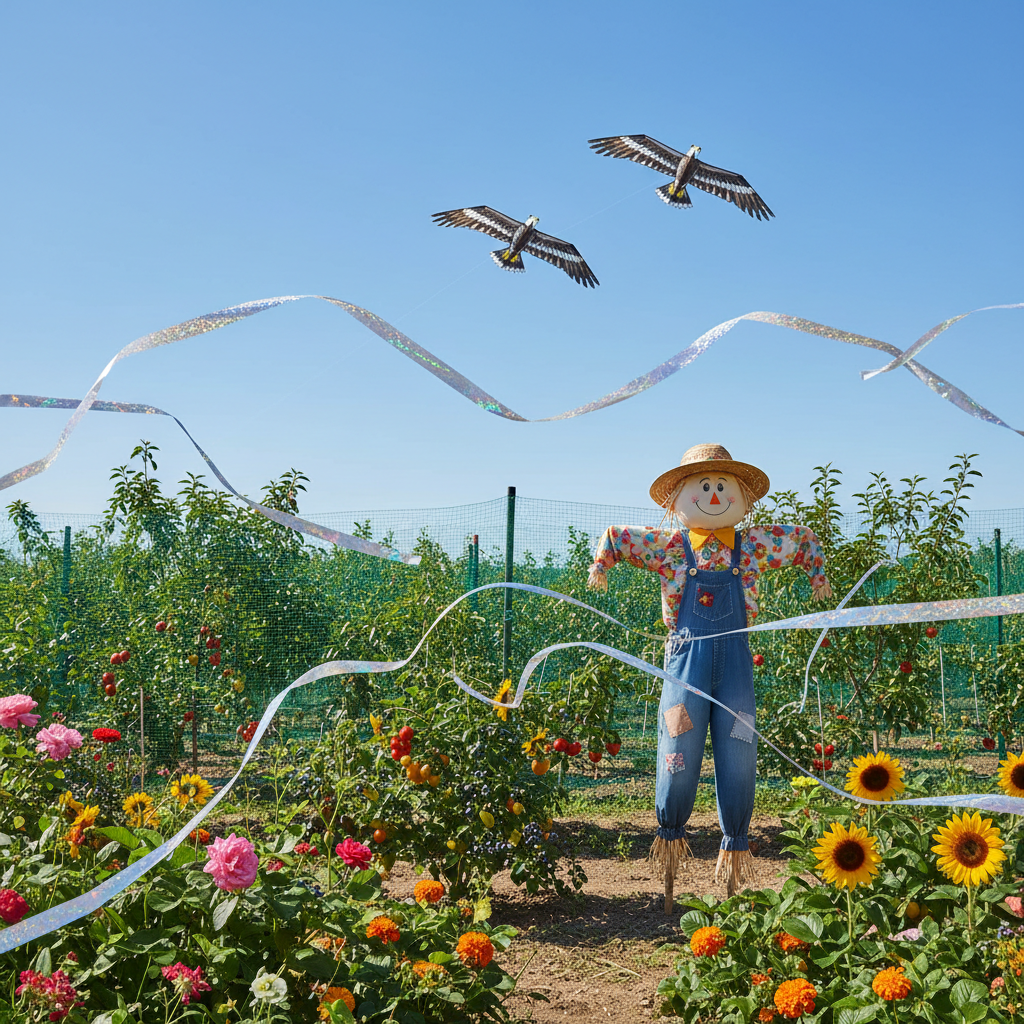
The idea of using a scarecrow is not bad, but the advanced types are far more efficient. Predator decoys, such as an owl, a hawk, or a snake mock-up, will prompt birds to run away due to their instinct. Here, you need to move such decoys regularly, or they will eventually lose their effect. Birds will figure out that a plastic owl is not a threat if it stays on the same post for 3 weeks without causing any harm.
Bird-Scaring Kites and Balloons
The kite you choose is a bird of prey. As it flies, it moves like a hawk on the hunt.
Fly kites shaped like birds of prey in your garden. The swooping and diving motions of the kite when the wind blows imitate a hunting hawk. Scare balloons decorated with large, reflective “eyes” work well too. The eyes staring at the smaller birds make them feel threatened.
Physical Barriers
Most times, the old saying the best defense is a good offense, turns out to be true. Obtaining first access through the means of physical blockage might still be the only way to protect a certain part of your crop.
Netting and Mesh
The netting is the perfect solution when it comes to keeping birds away from the fruit trees and the berry bushes.
- Choose the right size: Pick a mesh that is small enough so that birds cannot slip in or even get their heads stuck.
- Lift the net: Use hoops or stakes to raise the netting. If the net is pressed against the fruit, the birds will be able to peck through it despite the net.
- Make the edges tight: Hold the net down with pins so that the clever birds won’t be able to come in from underneath.
Row Covers and Garden Fencing
Floating row covers are very thin cloths of natural fibers that let light and water in but keep pests out. They work great as seedling protectors. For bigger gardens, there is a great variety of options such as chicken wire cages and hardware cloth tunnels, which give a strong and reliable shelter from marauding birds that won’t give up easily.
Auditory Deterrents
Birds can also hear very well, so sounds that are very loud or unpleasant to the ears can be a cause of the garden being an unsuitable place for them.
Ultrasonic Devices
These gadgets send out high-frequency sound waves, which cannot be heard by humans but are irritating to birds. Additionally, they are motion-sensor controlled, which prevents birds from becoming accustomed to a continuous sound.
Noise-Makers and Alarms
Wind chimes can be helpful; however, usually their effect lasts only for a short while. If you want a more powerful treatment, a few gardeners use machines that play recordings of bird distress calls or hawk calls. These are the sounds of danger from a flock’s point of view.
Natural and Organic Solutions
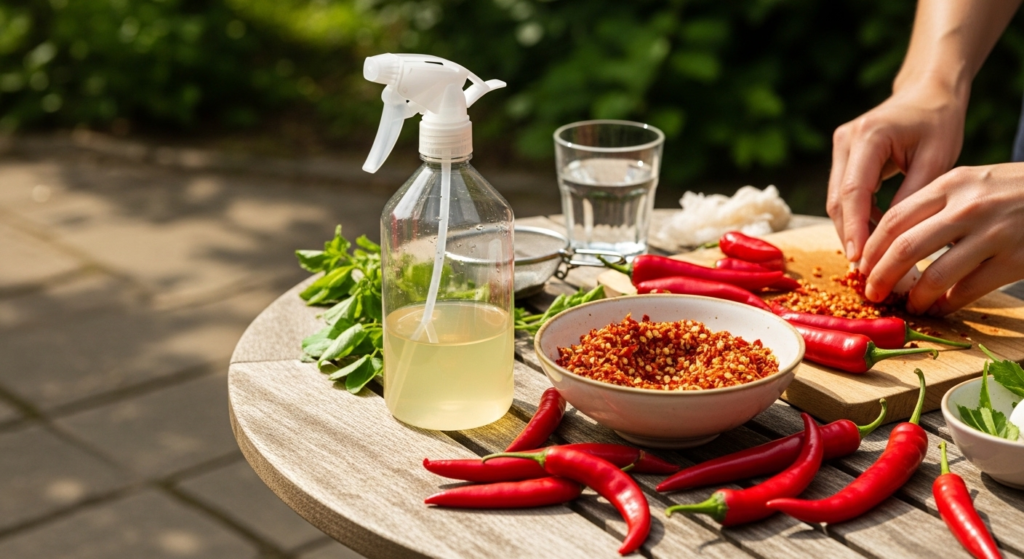
In case you are concerned about your garden becoming crowded by plastic decoys and nets, you certainly can go for a solution that is more nature-friendly. There are organic ways to deter birds from garden beds that depend on taste and smell.
Planting Decoy Crops
Decoy crops are about half of the garden that you sacrifice. Thus, you segregate an area that would be the lure for the birds by planting their food that they really like, such as sunflowers or mulberry bushes, and keep the rest of your garden safe. With the intention that birds will consume the easily accessible food and thus leave your vegetables for you. It is a pretty good strategy in the case of a big garden when you can keep two locations far apart.
Using Natural Sprays
Compared to humans, birds mostly have a less developed sense of taste; however, certain smells and even some textures are acceptable deterrents. You can prepare a repellent at home using ingredients from your kitchen.
Chili Pepper Spray
Capsaicin irritates birds (and squirrels), which is the main component of chili peppers that makes them spicy.
- Recipe: Mix 2 tablespoons of crushed chili peppers (cayenne works well) or hot sauce with 1 gallon of water. Add a few drops of biodegradable dish soap to help it stick.
- Application: Spray this mixture directly onto the leaves and stems of your plants. Don’t spray fruit if you are going to eat it soon, or wash the fruit thoroughly after picking. Reapply after rain.
Garlic Spray
The pungent odor of garlic confuses and scares away not only birds but also other pests.
- Recipe: Mash 4-5 pieces of garlic and leave them to steep in warm water for one day. Filter the liquid and pour it into a spray bottle.
- Application: Keep your plants misted and wiped with this regularly.
Encouraging Natural Predators
As humans, we might have to create sophisticated methods to solve problems, but nature always keeps things simple. If you invite natural enemies of pest birds into your garden, there will be fewer of the birds.
Attracting Birds of Prey
The birds, such as hawks, owls, and falcons, are perfect natural pest control agents. You could even bring them to your garden by building tall perches or by supplying nesting boxes. If there is a hawk at the tree, which is quite near to your garden, it may literally be the end of the sparrows’ and starlings visiting your garden.
Providing Habitats for Beneficial Insects
Good bugs don’t prey on birds directly, but a thriving ecosystem helps a great deal. The presence of predatory insects, such as ladybugs or praying mantises, results in fewer pest insects. You thus get rid of the insect meal that would attract insect-eating birds, and subsequently, fewer birds would visit to satisfy their insect diet.
Making Your Garden Less Attractive
You may not need to try all the fancy methods on how to get rid of pesky birds in your garden. The greatest weapon of all may be the basic cleaning up. By removing all incentives, you effectively “encourage” birds to look for food somewhere else.
Removing Standing Water
Find and fix water leaks that provide easy access to water for birds.
- Repair leaking taps if you have any.
- Empty plant stand ‘bowls’ after a rain.
- Remove puddles by raking or leveling out the soil in low places of your paths.
Is there a birdbath at your place just for the looks of it? During the harvesting season, keep it either empty or in the furthest part of the garden.
Harvesting Ripe Fruits and Vegetables Promptly
A ripe tomato is like an advertising sign for birds. It is almost natural that a bird will find the tomato on the vine left out for too long. So, picking fruits and vegetables as soon as they are ready is the best way of reducing losses. You can harvest fruits and vegetables just after the onset of ripening and then let them ripen on the window ledge indoors. Quite a few fruits, like tomatoes, have been known to do well this way. They will be just as tasty, and the birds won’t get them.
Cleaning Up Fallen Seeds and Fruits
Rotten fruits left on the ground can attract not only ants and wasps but also birds. Therefore, it is absolutely necessary that you keep the surroundings of your fruit trees and berry bushes. Also, ensure the bird feeder is set far away from your garden beds. Otherwise, the birds eating seeds directly from the ground may become ground-feeders, and thus, your seedlings would be the next victims.
Combining Methods for Best Results
Every now and then, imagine what the birds think of you and your garden. They compete with other species for food and shelter, and as a result of their intelligence and adaptability, the environment that you set for them soon becomes a development of their minds as well. Relying on only one method may sooner or later lead to the birds figuring out your plan. To be the most successful, the gardeners usually go for several different approaches.
Importance of Varying Deterrents
You actually want to keep it as a mystery to the animals, so don’t stick to one method too long. Experiment with combinations and see what works best.
- Week 1: Install a reflective tape.
- Week 2: Make use of the Owl Decoy alongside the tape.
- Week 3: Play a bird distress call and apply chili pepper spray.
By continuously changing the surroundings, you get the birds off their tracks. Eventually, they will think of your garden as a place filled with uncertainty and danger.
Seasonal Adjustments
Depending on what time of the year it is, you may want to change your strategy.
- Spring: Save your seeds and seedlings from attack. For that, put on your defensive armor: row covers and netting.
- Summer: Shift the attention to the fruits that mature. Use flash tape and ultrasonic devices during the picking season.
- Fall: By cleaning up the place, you will prevent the birds from forming winter territories near the growing areas.
Why Humane Methods Matter
It is worth mentioning that a lot of bird species are safeguarded under various legislations. To deliberately injure or kill a protected bird species is not just unethical but can also be punishable by law. Moreover, birds are still quite important to us in the long run as they help us to eliminate a huge number of mosquitoes, caterpillars, and beetles. Using humane deterrents simply means showing birds the door of your garden without actually kicking them out.
A Final Word on Garden Protection
It takes both patience and persistence to protect your garden. Figuring out how to deter birds from garden plots is most likely going to be a process of multiple trials and errors. What works for one bird might not work for another. Nonetheless, behavioral insight plus depriving them of their favorite treats will help to regain possession of your garden.
Don’t go overboard with things as a start. First, just remove from the ground any fallen fruit, and the next day, put up some shiny tape. When neither of the two works, consider investing in a net. Try out different variations and combinations until you end up with the perfect defense that suits your tiny patch of earth best.
It’s not the end of the world if you lose a little to the birds because that is only natural. But don’t they start with temptation? Thus, these methods of yours should work fine.