
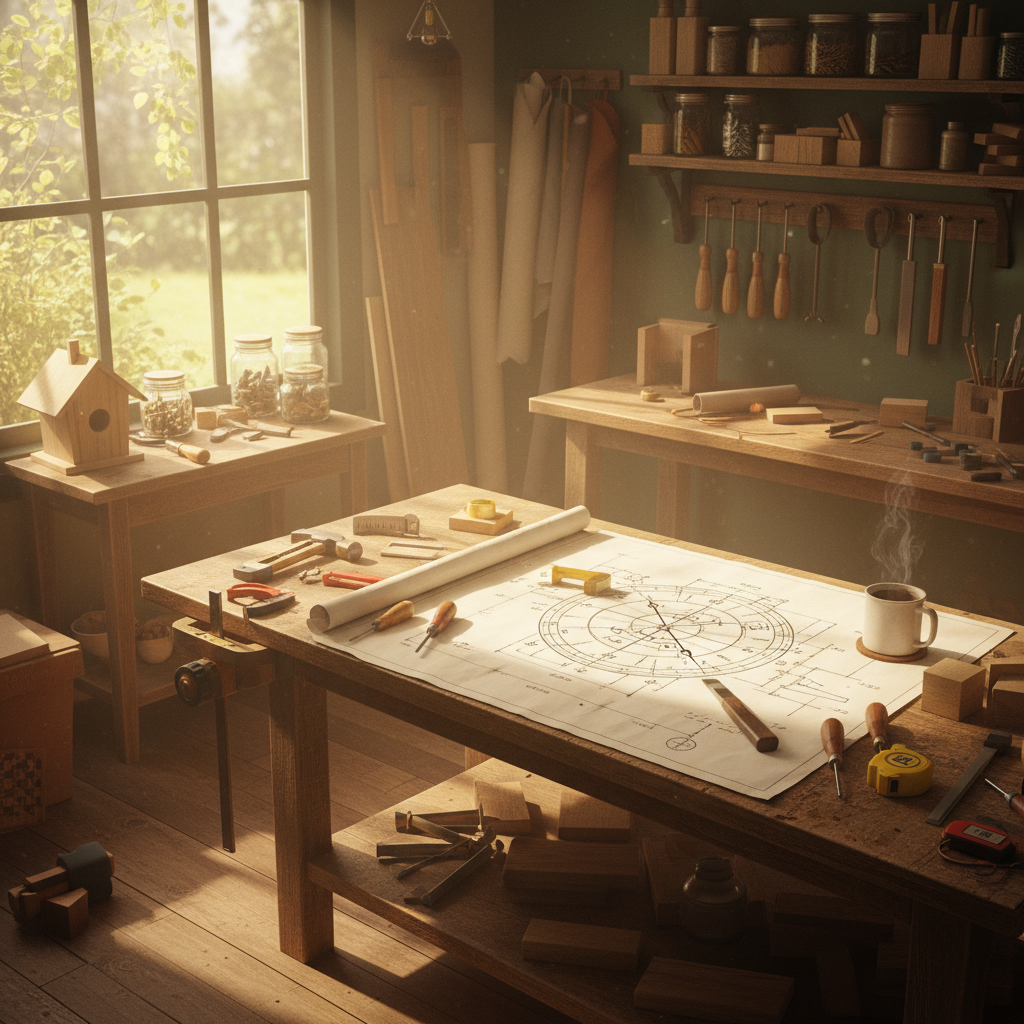
There is a unique excitement in changing the settings of your home with your bare hands. It doesn’t matter whether you are tearing up the old carpet to expose hardwood floors or crafting a custom bookcase; the fulfillment of having done something well is second to none.
But often the main difference between the dream renovation and a half-finished one lies in getting ready. The most critical thing you can do before grabbing a hammer is learning how to plan a diy home project.
Many homeowners generally jump into doing renovation works just with their enthusiasm and a Pinterest board in hand. Even though passion is essential, it doesn’t really help in the case of load-bearing walls, electrical wiring, or inevitable budget overruns. Not having a plan often means that costs go out of control and the initially planned weekend-long projects become month-long ones.
So, if you wish to learn effective tips on how to plan a diy home project, you are at the right spot. This guide will take you through every stage of the procedure so that your dream becomes a reality without the stress that is usually attached to a home improvement project.
By grasping the ins and outs of how to plan a diy home project, you are ensuring a more straightforward work process, a safer environment, and a final result that will essentially increase the value of your property.
Assessing Your Skills and Resources
Prior to purchasing any supplies or commencing demo day, you are strongly advised to review your skills and all your resources. Doing a reality check with yourself might prove to be the best thing that you could do, since it might save you a lot of money later on when it comes to repairs.
Evaluate Your Skill Set
Renovation shows on TV tend to make it seem as if any complex task can be done in a 30-minute montage. The truth is that trades such as plumbing, electrical work, and carpentry take several years of training and practice in order to become proficient.
So, the really important thing to ask yourself is whether or not you are capable of executing the job in a safe manner and according to a code. For example, painting a bedroom would be a task that poses very little or even no risk at all, while, in contrast, rewiring the kitchen would be quite a different story.
In case you have any doubt, then you should either watch some tutorial videos or talk to a professional who would give you some idea of the work’s difficulty. You should know that it is not a sign of weakness to ask for help when a task is too difficult for you-it is actually one of the features of clever planning.
Audit Your Tools and Workspace
Is your equipment up to date? After all, a butter knife cannot be used as a screwdriver, and a handsaw is hardly ever an alternative to a circular saw. The best thing to do in these circumstances would be to make a list of what you already have and what you will have to rent or buy.
Don’t forget about the cost of renting good-quality equipment when you factor in specialized machinery like floor sanders or tile cutters. Furthermore, consider the physical aspect as well. Are you capable of making room for the materials? Is there a place where you can safely do woodcutting or mix concrete?
When you try to figure out how to plan a diy home project, you often overlook the importance of logistics, which, by the way, are vital to keeping your house a comfortable place to live during a renovation.
Defining Your Project Scope
“Scope creep” is an absolute disaster for any renovation project. It may be just a simple vanity replacement at first, and then somehow you find yourself deciding to retile the entire bathroom because “the old tiles no longer match”. To put an end to this, you must confine yourself within certain specific limits.
Set Specific Goals
What exactly is it that you want to achieve? Your main goal is probably upgrading the look, enhancing the functionality, or addressing a structural problem. Write down your number one objective. Should it be a kitchen renovation on a budget, then your scope might include repainting the cabinets and changing the hardware, but definitely not relocating the gas line.
Break It Down
If you break down your labor into smaller, more manageable parts, it will be easier to get the job done. Instead of simply putting “renovate bedroom” on your checklist, you can elaborate on the tasks like pulling off the baseboards, brushing the cracks, applying the primer, painting the ceiling, painting the walls, and laying the new floor.
With this detailed way of working, you can see the steps you should take and also be sure that you haven’t skipped some crucial small steps, like using painter’s tape for outlets before painting.
Planning and Design
This is the great part, but a little bit of self-control wouldn’t hurt. Since you are now aware of what you want to do, you should figure out its exact look.
Research and Inspiration
It is very important to gather ideas and inspiration, but don’t limit yourself to just the visual aspect. Try to find change examples in terms of layouts and combinations of materials.
When you get to the part where you are thinking about how to plan a diy home project, always remember to check if it complies with the building codes and whether you need any permits from your city or town.
There is nothing that could stop your project faster than a “stop work” order from the municipality because of the lack of a permit for your new deck.
Create Detailed Blueprints
You don’t have to be an architect, but a plan is something you should definitely have. Make a rough sketch of your room, measuring the different parts. Her,e precision is something you cannot compromise. The saying “Measure twice, cut once” applies as much to your floor plan as it does to your wood.
If you are going to be moving the furniture around or puttingin cabinet installations, then you can use the masking tape on the floor to picture the furniture’s exact location. This tangible form will help you identify any problem areas in the room that a flat drawing might not reveal.
Mastering How to Plan a DIY Home Project Budget
Money matters are no doubt the most worrying thing when it comes to home renovation and the like. Your budget being tight is the only thing that can actually stop you from stressing over money issues.
Estimate Costs Accurately
Look up material prices nowadays. Timber, copper, and finishing materials all can change in terms of pricing. Do not opt for rough estimations. Go online or visit a local hardware store and take real figures from there.
Also, do not forget about the expense of consumables that usually get ignored, for instance, sandpapers, saw blades, glue, screws, and drop cloths. These tiny elements can make your total noticeably bigger.
Acquiring Materials and Tools
Prepared and with your budgets and plans in hand, you can go shopping now. Still, purchasing materials is not a matter of simply taking your credit card to the store; it’s a strategic decision if you want to avoid delays.
The Master Shopping List
Make a list of every single item that you will need before going on a shopping trip. Organize your shopping plan so that it resembles the store’s layout or grouping by product category. What is the use of taking three different hardware store trips if you can do everything in just one or two trips? Why not buy in bulk all you want of the non-perishables?”
Prioritize Quality

The lure of quick saving by purchasing the most inexpensive things is there for everyone, but most of the time, that is a mistake. When you go for the cheap stuff, it always costs you extra in the end: the cheap paint needs more layers; the cheap tools break easily or don’t work quite as well; the cheap timber can end up warped. Indeed, go for quality whenever you can.
Apart from the good tools, the paint brushes, for example, will make your job more enjoyable, and the high-quality screws won’t strip that easily. A part of the learning process when it comes to how to plan a diy home project entails recognizing the fact that sometimes spending a little extra money upfront can actually be a good investment of your time and frustration.
Step-by-Step Execution
You have all the necessary items now, and you are ready for the plan to be put into action. The key factors in doing well are discipline and patience, remember.
Follow the Roadmap
Don’t deviate from the sequence of tasks you have laid out earlier. For example, you should not paint the walls before finishing sanding the drywall. Going back and forth results in errors and doing things twice.
For example, it is advisable that you should always start to work from the top downward, i.e., paint the ceilings prior to the walls and leave the floors for the last in order to ensure that they don’t get damaged.
Pace Yourself
People can and do get burnt out. Quite often, it takes longer for a DIY project to be completed than the time that was initially allotted for it. If you allow yourself to be in a hurry, then you will be careless, and a messy thing that, color-wise, is also quite ugly is what you will come out with. Work breaks and weekends should be planned realistically, as well as how much you can do. Instead, how about doing just one thing perfectly on Saturday?
Safety Measures

Compliance with safety regulations and requirements should go without saying. Unfortunately, the home renovation industry is one of the largest contributors to the number of people getting injured or admitted to the emergency room.
Personal Protective Equipment (PPE)
Protecting your eyes, ears, and lungs is a must. You should wear safety glasses whenever you are cutting, hammering, or using power tools. In case of any noise-producing equipment like saws, drills, etc., you should wear ear protection. The best respirator, for example, an N95 mask (PPE), is necessary when sanding or insulation work is involved.
Maintain a Clean Site
Disorganized living quarters are a recipe for disaster. You could easily be knocked down by anything from loose wires to stray wooden pieces lying around. You should clean up after yourself on a regular basis.
Additionally, before you start any invasive work, please make sure to know where the main water shut-off and electrical breaker panel are located. When you learn how to plan a diy home project properly, you’ll find that preparation for safety is just as important as the actual construction.
Troubleshooting Common Issues
Sometimes you have that really well-thought-out plan, and still, you experience problems. You might have accidentally stripped a screw, sawed a piece of wood too short, or realized that your walls aren’t square.
Identify and Adapt
If things get messed up, take it easy. Don’t use up your energy and brainpower to think of a solution when you are irritated. Step out and look at the situation calmly. Is it about the material that has failed, or is it a poor user’s performance?
The majority of errors that are made during the DIY process can be corrected. After all, there is a reason why we have putty.
Know When to Call a Pro
It is widely accepted that there is such a thing as wear-off returns. If you stumble upon aluminum wiring or structural rot, or if complex plumbing venting issues arise, you should definitely call an expert to the rescue.
If you keep going without having the right set of skills, then you could seriously jeopardize your home’s structural integrity. A large part of successfully figuring out how to plan a diy home project is the awareness of when to walk away. Simply put, if you do this, you will not only protect the value of your dwelling but also the safety of your family.
Finishing Touches and Cleanup
It’s almost over with this phase only. This phase, however, is what separates a novice from a pro.
The Final 10%
It is often said that the last 10% of a project usually requires about 50% of the total effort. The style, the overall optics of the work, are often characterized by such tedious tasks as installing trim, caulking seams, touching up paint, and installing switch plates.
These tasks should not be overlooked or even skipped (by the way, messy grout lines will ruin the look of a tile job, regardless of how beautiful the tiles are).
Thorough Cleanup
Once you have put the tools down, give the place a real deep cleaning. You might say that the construction dust can travel everywhere. For instance, change your HVAC filters, wash down the walls, and vacuum as much as possible.
The unveiling is far from finished until the room is shining. This is the last step in the entire adventure of learning how to plan a diy home project from start to finish.
Start Your Journey Today
Being in charge of everything that has to do with your house’s upkeep and improvement is truly a rewarding experience. It will increase both your self-esteem and your home’s market value.
The whole thing might initially appear as a huge challenge, but once you break it down into the different stages, you will see it as a process that brings order to chaos.
In short, the key to success is to be honest about your capabilities, budget rigorously, and act with discipline. Following these top how to plan a diy home project guidelines, you are not just making some repairs; you are creating a home.
Take your time, stay safe, and get most of the process of making a tangible and lasting thing. Your dream home is there waiting for you to uncover it. One well-planned project at a time.