
We love our homes. We are attached to our neighborhood, the local schools, and the memories we have made there. However, recently, the walls seem to be coming closer. It might be that your family has grown, you have started working from home, or you simply want to have your hobbies in a dedicated space.
Usually, the immediate solution is to surf real estate listings for houses, only to see that moving is costly and stressful. On the other hand, remodeling a house is often said to lead to six-figure bills.
So you have come to a familiar dilemma: continue living in a cramped space or spend all your money on renovations. The good news is that there is a middle way. A lot of people who own houses would love to extend their homes, but are frightened by the cost, so they try to find cheap ways for home additions.
The truth is that adding more space is not only for the rich. With smart planning, innovative design ideas, and a strict selection of materials, you can get more space without running into debt.
Luckily, you can achieve your dream of a spacious haven by following an efficient, low-cost home addition, which emphasizes smart design instead of merely increasing the square footage. This e-book will help you through every stage of the home addition process, from the initial planning to the final touch, so that you can really maximize the value after each dollar you have spent.
Planning and Budgeting for Affordability
Whether a construction project turns out to be a success or failure depends on the decisions that are made before the first nail is hammered. If your aim is to be cost-effective, the planning stage is not something to just tick off the checklist, but a financial shield.
Defining Scope and Hard Limits
If you want to keep your sspending toa minimum, then you have to be very strict with the scope of your project. First, pinpoint the exact issue you want to fix. Is a completely new master suite necessary, or only a half bath? Does the living room need an extreme extension, or will a simple breakfast nook do?
Moreover, when setting the budget for low-cost home additions, you need to differentiate quite clearly between the things that you can’t live without and the ones that you would like to have but can do without. Having just some vague idea in mind, your contractors will probably come up with expensive alternatives themselves.
Make sure to be very explicit. If a 10×12 room with basic electrical outlets and laminate flooring is what you mean, then write it down. This way, you will be avoiding scope creep, which is when little upgrades over time balloon the budget to an unmanageable size.
The Contingency Fund
As paradoxical as it may sound, if you are pinching your pennies, it is still worth having the contingency fund. Renovation projects have a bad reputation for always having some hidden issues, which result in having to spend even more money, e.g., decayed wood behind the siding, outdated wiring, or non-compliant plumbing.
Building a detailed budget spreadsheet is what makes low-cost home additions work wonders. In this budget plan, set aside 10%-15% of the total cost for unforeseen expenses. Not using the contingency fund means going under budget, which is great. Using it means that you have been able to finance the problems through the extra money without having to resort to high-interest loans.
Financing Wisely
If you get a high-interest personal loan or use credit cards to finance the project, the way of paying will affect the total cost unfavorably. Why don’t you consider Home Equity Lines of Credit (HELOCs) or even specific renovation loans, which usually have lower interest rates? Be as geared up and prepared for financing as you are when looking for building materials.
Innovative Design Ideas for Low Cost Home Additions
The shape and style of the house will determine how much the project will cost. A complicated roof, non-standard shapes, or intensive foundation work will really bother your budget. If you want to save at least some money, then you should start thinking about how you can add space in a creative way.
The “Bump-Out”
Interestingly enough, there doesn’t have to be a room involved at all when the “bump-out” is the subject. The fact is that one of the least expensive ways to add a little home space is actually to extend an existing room without laying down a new foundation.
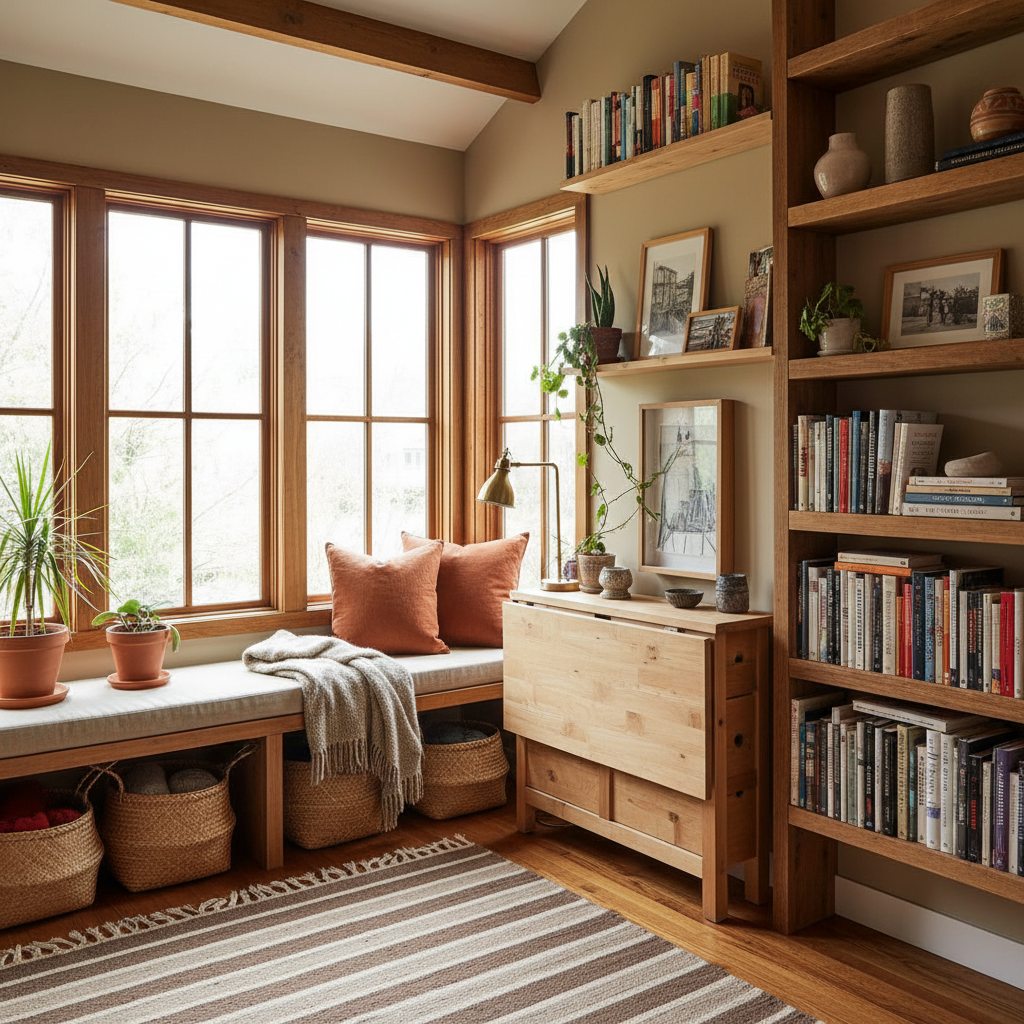
A bump-out extension is only a very small one – it might be just two or three feet, i.e., enough to have a window seat, to put in a bathtub or a kitchen island – but it makes a surprise from a room. The reason is that in the majority of cases,s the bump-outs do not require new foundations as they take the support from the existing floor joists being “cantilevered”. So, because of this, you save thousands on the excavation and concrete costs.
Garage Conversions
Maybe you don’t even realize it, but a garage being used mainly as a storage for boxes and decorations is like a treasure that holds a potential living space. Converting a garage into a living space is an exemplar of the least expensive additions to a home because the shell is already there. You have the roof, walls, and the concrete floor.
Your money is spent on finishing the interior, like insulation, flooring, drywall, and HVAC, and not on the construction of the new one. As such, the conversion project can cost around half per square foot of a traditional addition.
Finishing the Basement or Attic
The basement or the attic finishing projects are also similar to the garage conversion in that you finish the space you already own and use it. These types of projects usually cost less than building out because the home footprint does not change.
Generally, the problems here are system-related ones: sufficient ceiling height, moisture control, and emergency egress (windows or doors). Nevertheless, the finished basement still has quite a high Return on Investment (ROI) according to statistics.
Prefabricated Sunrooms
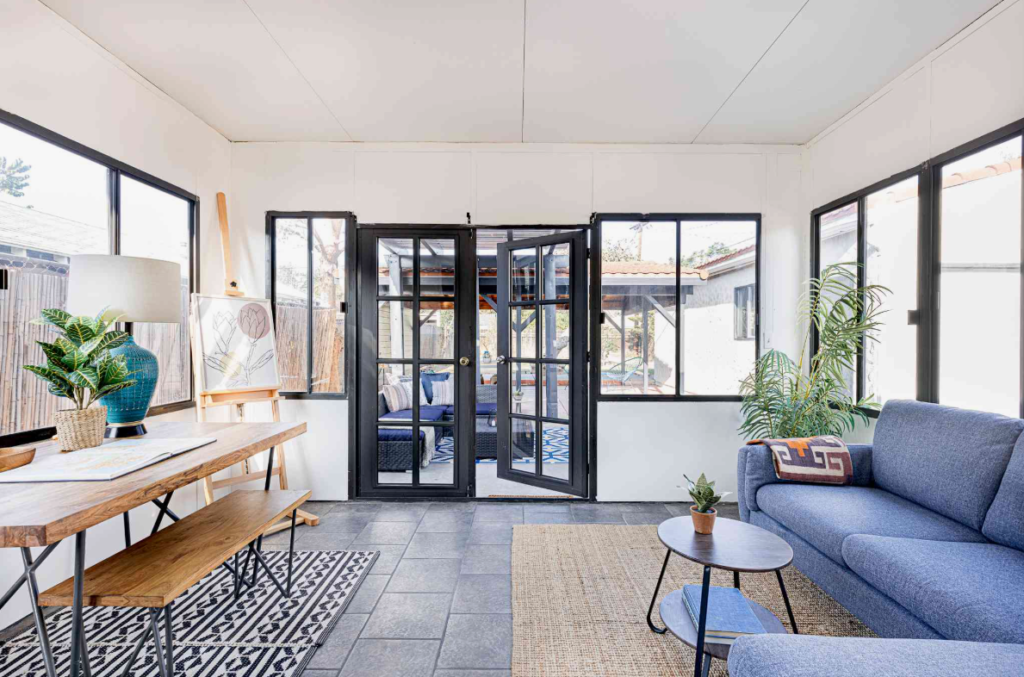
Nowadays, if your primary concern is a living area rather than a bedroom, then give a prefab sunroom a thought. The current sunroom structures are not only more efficient in terms of energy but also kits that help keep labor costs to a minimum, which can be installed much faster than stick-built additions; hence, they are a good alternative on the basis of time, cost, and energy efficiency.
DIY vs. Hiring Professionals: A Cost Analysis
In any renovation, labor is usually responsible for between 30% and 50% of the of the total cost. You might be tempted to believe that cutting out the labor by doing the work yourself is the guaranteed way of saving money.
The Sweat Equity Trap
It is quite typical of many house owners to assume that low-cost home additions can only be achieved if all the labor around the house is done by them. Even though painting your walls, putting up the moulding, and installing some floating floor might be cool DIY tasks that will save you a good amount of money, the real issue remains with the structural ones.
For sure, if you do not have any clue on how to install a load-bearing wall or you do not know the best way to flash a window, you are heading for a disaster, which may include structural failure and water damage.
What is more, a mistake by an unskilled person can quickly turn low-cost home additions into costly repairs. For example, if the electrical rough-in was so badly done that the inspector instructed you to tear down the wall, then not only would you be spending on new materials, but you would lose your valuable time as well.
The Hybrid Approach
The most about giving it a shot by combining the two is that you would be saving on management fees by acting as your own general contractor. Meanwhile, professional contractors would take care of the exterior work (foundation, framing, and roofing) and also the licensed trades (electrical, plumbing, HVAC).
You would then be responsible for the finishing work, such as installing insulation, hanging drywall (or at least painting it), installing cabinets, and laying flooring. This way, the house will be safe and water-tight, but you will still have the interior part where you can sweat your way to savings.
Material Selection: Durability on a Dime
Just because you don’t have much money to invest, doesn’t mean that you should give up entirely on beauty and elegance. There are lots of inexpensive materials that mimic the look of the expensive ones and cost only a fraction of the price.
Standard Sizes are Your Friend
Custom-made windows and doors tend to be the biggest money eaters. During the space planning stage, keep in mind to make all the window and door openings suitable for standard sizes that you can buy “off-the-shelf” at large hardware stores. For example, a standard window may set you back $300, whilst a custom window which is only two inches wide,r may be as much as $800. Properly managing your design style around standard components is a clear way for your low-cost home additions to stay within your budget.
High-Impact, Low-Cost Finishes
The aesthetic appeal of the low-cost home additions is majorly at determination of the suitable finishes. An ideal finish should be such that it looks expensive but not financially out of reach.
- Flooring: With all the advantages that it has: durability, price level, versatility, Luxury Vinyl Plank (LVP) is undoubtedly a champion material for low-cost home additions.
- Countertops: Laminate is an extremely versatile material that gained a lot of ground lately. At a tenth of the price, high-definition laminate can look uncanny as granite or quartz; on the other hand, butcher block will offer a low price and add heat.
- Fixtures: Purchasing plumbing and light fixtures of the middle-range is always a good idea. Cheapest ones tend to break and leak, thus costing you more in the long run. Mid-range products’ internal parts are usually the same as those of luxury brands, but without fancy branding.
The Salvage Market
There is no need for every single material to be brand new. Habitat for Humanity ReStores, Facebook Marketplace, and architectural salvage yards are full of various old products. You can get a very good quality cabinet, a door that almost looks new, or a pack of insulation that is hardly used at a fraction of the price.
Bringing old materials from salvage yards into your low-cost home additions not only creates a more aesthetically diverse and appealing walking environment, but you also save a notch out of your budget.
Project Management: Staying on Track
Time is money. In fact, in construction, this saying is very close to the truth. If you need to pay for equipment rental, have compromised your salary by taking time off work, and are paying for the interest on your loans, then every additional day that the construction drags on is a loss of your money.
The Schedule
Draw up the schedule. It should be known which step comes after the other: demolition, framing, rough-in mechanicals, insulation, drywall, flooring, trim, paint, and finish mechanicals. There are set costs for everything that will be incurred, and you will work with specialists who know their schedule.
For example, an electrician’s “call-back” is paid for if you schedule the drywallers before the electrician has finished; however, when you pay the drywallers for the time that they were waiting, that cost is only indirectly related to the electrician’s call-back, but is real nonetheless.
Communication
When you are dealing with subcontractors, communication is crucial. At the same time, it is also the secret weapon that, if used properly, low-cost home additions are the implementation of a sound and strict project management system.
The first thing is to ensure that everyone playing a part in the process is very familiar with not only their individual roles and responsibilities but also the project timelines and any other expectations. If a contractor says that additional work will cost you $500, then ask for a written explanation and a change order before you sign off on the work.
Permitting
Do not think that skipping permits is a good way of saving money. It is just another myth. In case your building work is found to be without a permit, the most that officials can do is to shut down the site and force you dismantle the work until it is done to code.
Besides, work that is without a permit may deteriorate your property value and make potential property buyers reluctant when you decide to sell.
Building Value on a Budget
Expanding your home can be so much more than just a transaction of taking money out of your savings. It is, in fact, more about changing your mindset from “what do I want?” to “what do I need and how can I fulfill that most efficiently?”
By adopting cleverly designed solutions such as bump-outs and garage conversions, implementing a hybrid DIY model, and sourcing materials that are of high value, you will transform your personal space. Most importantly, the final goal should not only be to add to the physical size of the house but also to make it more livable.
The previously mentioned strategies will enable you to carry out low-cost home additions that significantly contribute to your life value and comfort. You have never been so close to and cheap to the realization of your dream house as a functional and spacious one.